How To Do Mindfulness Meditation Correctly is all about diving into the essentials of mindfulness practices that can truly change your life. It’s more than just a trendy buzzword; it’s about being present and fully engaged in the moment. In this guide, we’ll uncover the fundamentals, tackle common challenges, and explore various techniques that can make your meditation experience not just effective but also enjoyable.
From creating the perfect space to integrate mindfulness into your daily routine, you’re going to discover how to harness the power of mindfulness meditation to boost your mental well-being. Get ready to explore how simple practices can lead to profound changes in your emotional resilience and overall happiness!
Understanding the fundamentals of mindfulness meditation is essential for practicing it correctly.
Mindfulness meditation is a practice rooted in ancient traditions, primarily originating from Buddhist teachings. At its core, mindfulness is about paying attention to the present moment without judgment. It invites individuals to observe their thoughts, emotions, and bodily sensations as they arise, fostering a sense of awareness and acceptance. This practice has transcended its religious origins and is now embraced worldwide for its mental health benefits.The concept of mindfulness emerged in the West largely due to the work of Jon Kabat-Zinn, who introduced mindfulness-based stress reduction (MBSR) in the late 1970s.
He adapted traditional Buddhist practices to suit a secular audience, making mindfulness accessible to everyone. Since then, research has shown that mindfulness can improve emotional regulation, decrease anxiety, and boost overall well-being. Practicing mindfulness invites a shift in focus from the chaotic stream of thoughts that often dominate our minds to a more tranquil state of awareness.
Key principles guiding mindfulness meditation practices
Understanding the key principles of mindfulness meditation can enhance the effectiveness of the practice. These principles act as a framework for individuals to engage in meditation correctly and reap its full benefits. Here are the essential components:
- Awareness: Cultivating an open, curious attention to the present moment.
- Non-judgment: Observing thoughts and feelings without labeling them as good or bad.
- Acceptance: Embracing experiences as they are, rather than how we wish they would be.
- Patience: Allowing experiences to unfold in their own time without rushing or forcing outcomes.
- Letting go: Releasing attachment to thoughts and outcomes, fostering greater mental clarity.
Practicing mindfulness meditation regularly offers numerous benefits for mental health. Individuals often experience reduced stress levels, lower anxiety, and improved focus. Studies reveal that consistent practice can lead to structural changes in the brain, enhancing areas associated with emotional regulation and cognitive function. Furthermore, mindfulness meditation can improve sleep quality and increase resilience, providing individuals with valuable tools to navigate life’s challenges more effectively.
Identifying the common challenges faced when trying to meditate mindfully can enhance practice effectiveness.: How To Do Mindfulness Meditation Correctly
Meditation can be a transformative practice, but it’s not always smooth sailing. Many people encounter roadblocks that can disrupt their journey to mindful meditation. By recognizing these challenges early on, you can develop strategies to enhance your meditation practice and enjoy its benefits fully.Distractions are a major hurdle when it comes to meditation. Whether it’s your thoughts racing with to-do lists, the faint sounds of traffic outside, or even a pesky itch, these interruptions can throw you off course.
Addressing distractions is crucial, and one effective approach is to acknowledge them without judgment. Instead of fighting your thoughts, simply notice them and gently guide your focus back to your breath. This practice of acknowledgment can gradually train your mind to settle into a calmer state.
Common distractions and how to address them
Identifying distractions is the first step in managing them. Here are common distractions that might pop up during meditation and ways to tackle them:
- Racing thoughts: When your mind is buzzing, try using a mantra or focusing on your breath as an anchor. This can help bring your attention back and create a sense of calm.
- Physical discomfort: If you’re shifting around due to discomfort, consider adjusting your posture or using cushions for support. Making your meditation space comfortable can minimize these interruptions.
- Environmental sounds: Instead of getting frustrated with noises, try to use them as a part of your meditation practice. Acknowledge them, then let them fade into the background as you focus on your breathing.
- Emotional turbulence: If certain feelings arise, observe them without judgment. This practice helps in cultivating emotional awareness and can lead to deeper understanding and acceptance.
Patience and consistency play pivotal roles in overcoming the initial bumps on the road to mindful meditation. It’s essential to remember that meditation is a skill that takes time to develop. Just like learning to play an instrument, the more you practice, the better you’ll get. By being consistent with your practice, you’ll gradually notice improvements in your ability to focus and remain calm during sessions.
Strategies for maintaining focus during meditation
Having a few solid strategies in your toolkit can significantly enhance your meditation effectiveness. Here are some techniques to help you maintain focus and achieve a tranquil state of mind:
- Set a regular schedule: Committing to a specific time each day helps build a routine and signals to your mind that it’s time to meditate.
- Limit session duration: Start with shorter sessions, around 5-10 minutes, to avoid feeling overwhelmed. Gradually increase the time as you become more comfortable.
- Guided meditations: Using apps or online videos for guided sessions can provide structure, making it easier to stay engaged and focused.
- Create a peaceful environment: Choose a quiet space free from distractions where you feel comfortable. You can enhance the atmosphere with soft lighting or calming scents like lavender.
“Meditation is not about stopping thoughts, but recognizing that they are just thoughts and letting them pass.”
Creating an ideal environment for mindfulness meditation greatly impacts the quality of practice.
Establishing a conducive environment is essential for effective mindfulness meditation, as it can significantly enhance your overall experience. The right space can help you focus better and create a calming atmosphere that nurtures your practice. Let’s delve into the key characteristics that make a meditation space ideal and how minor adjustments can lead to a more fulfilling session.
Characteristics of a conducive meditation space, How To Do Mindfulness Meditation Correctly
A well-designed meditation area focuses on three main aspects: lighting, sound, and comfort. Each of these elements contributes to a peaceful setting, making it easier to enter a meditative state. Here’s how to optimize your meditation space:
- Lighting: Soft, natural light is ideal for meditation. If possible, choose a location with access to daylight. If that’s not feasible, consider using warm, dimmable lights or candles to create an inviting ambiance. Avoid harsh fluorescent lights that can be jarring and distracting.
- Sound: Minimize background noise as much as possible. If you live in a noisy area, using white noise machines or soft instrumental music can help drown out distractions. Alternatively, sounds of nature, like flowing water or gentle rain, can enhance relaxation.
- Comfort: Your meditation cushion or chair should support your posture while remaining comfortable. Ensure that your clothing is loose and non-restrictive. The temperature of the space should also be neither too hot nor too cold, allowing you to focus solely on your practice.
Minimizing interruptions and distractions
Creating the right mental space is as critical as having a physical space. Here are practical tips to reduce interruptions during meditation:
- Inform those around you of your meditation schedule, so they can respect your time.
- Turn off notifications on your phone or keep it in another room to avoid distractions.
- Use door signs or signals to indicate when you shouldn’t be disturbed.
- Set a timer for your meditation duration. This way, you can fully immerse yourself without worrying about checking the time.
Incorporating sensory elements to enhance the experience
Including sensory elements can significantly enrich your meditation practice. Scents and colors can create a more immersive environment, aiding relaxation and focus.
- Scents: Essential oils like lavender, sandalwood, or eucalyptus can promote relaxation. Use a diffuser or light incense to fill your space with calming aromas. Be mindful of allergies and sensitivities when selecting scents.
- Soothing colors: Choose calming hues for your meditation space, like soft blues, greens, or earth tones. These colors can create a serene environment that helps you settle into your practice more easily.
- Decorative elements: Consider adding plants or natural elements that resonate with you. These not only enhance the aesthetic of your space but also bring a sense of tranquility and connection to nature.
Creating a peaceful environment for mindfulness meditation allows for a deeper connection with yourself and enhances the overall practice.
Learning specific techniques for mindfulness meditation is vital for practitioners to deepen their experience.
Mindfulness meditation isn’t just about sitting quietly and trying to clear your mind. It’s a practice rich with various techniques that can enhance your experience and deepen your awareness. By incorporating specific methods, you can cultivate a more profound connection to your thoughts, feelings, and the present moment. Let’s delve into some effective mindfulness meditation techniques that can make a significant difference in your practice.
Various Mindfulness Meditation Techniques
To truly benefit from mindfulness meditation, it’s essential to explore different techniques. Here are a couple of powerful methods:
1. Body Scan
This technique involves mentally scanning your body from head to toe, paying attention to any sensations, tensions, or areas of discomfort. As you do this, visualize each body part relaxing. It promotes bodily awareness and helps release tension.
2. Focused Breathing
Here, the focus is on your breath. Inhale deeply through your nose, hold for a moment, and then exhale slowly through your mouth. Concentrating on the rhythm of your breath can keep your mind anchored in the present and away from distractions.Both techniques encourage a heightened state of awareness and can facilitate deeper meditation experiences.
Step-by-Step Guide for a Simple Mindfulness Meditation Session
Setting up a straightforward mindfulness meditation session can be beneficial, especially for beginners. Here’s a simple guide to get you started:
1. Find a Quiet Space
Look for a place where you won’t be disturbed. Comfort is crucial, so choose a spot that feels safe and peaceful.
2. Get Comfortable
Sit or lie down in a position that feels good. You can sit cross-legged on the floor or on a chair with your feet flat on the ground. Ensure your back is straight but relaxed.
3. Close Your Eyes
Gently close your eyes to minimize distractions and help you focus inward.
4. Start with Your Breath
Take a few deep breaths to settle into your space. Inhale deeply through your nose, filling your lungs, then exhale through your mouth, releasing any tension.
5. Focus on Your Breath
Bring your attention to your breathing. Notice the sensation of the air entering and leaving your body. If your mind starts to wander, gently guide it back to your breath without judgment.
6. Include a Body Scan
After a few moments of focused breathing, begin a body scan. Start at the top of your head and work your way down, paying attention to each part of your body. Acknowledge any sensations without needing to change them.
7. End the Session
After 5-10 minutes, gently bring your awareness back to the room. Wiggle your fingers and toes, then open your eyes. Take a moment to notice how you feel before getting up.This method can help cultivate mindfulness and establish a calming routine.
The Role of Visualization in Enhancing Mindfulness Meditation Practices
Visualization can be an effective tool in mindfulness meditation, enhancing your focus and deepening your experience. By creating mental images, you can engage your senses and cultivate a more immersive meditation practice.
Guided Imagery
This technique involves picturing serene landscapes, like a calm beach or a tranquil forest. Imagining the sights, sounds, and smells of these places can help ground you in the present moment and promote relaxation.
Symbolic Visualization
Some practitioners use symbols that represent peace or balance. For instance, visualizing a glowing orb of light can signify releasing negativity and embracing positivity.By incorporating visualization into your mindfulness meditation sessions, you can foster a more profound connection with your inner self, enhance concentration, and encourage a sense of peace.
Integrating mindfulness meditation into daily routines can help individuals maintain consistency and reap benefits.
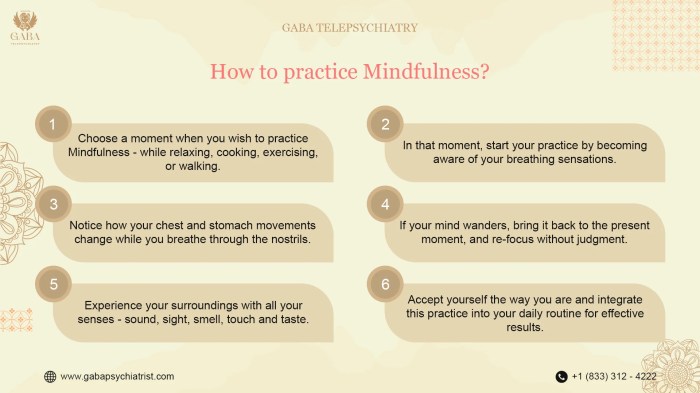
Incorporating mindfulness meditation into your everyday life isn’t just about setting aside time for formal practice; it’s about weaving it into the fabric of your daily activities. When done consistently, it can significantly improve your mental clarity, emotional balance, and overall well-being. This section will explore practical ways to integrate mindfulness meditation into your routine, showcase inspiring success stories, and emphasize the importance of setting realistic meditation goals.
Practical Ways to Incorporate Mindfulness into Daily Activities
Integrating mindfulness meditation into your daily life can be as simple as taking a moment to breathe deeply during routine activities. Here are some specific ways to do this effectively:
- Morning Rituals: Start your day with just a few minutes of mindfulness. After waking up, take a moment to sit quietly, focus on your breath, and set your intentions for the day.
- Mindful Commutes: Whether you’re driving, biking, or using public transport, use this time to practice mindfulness. Focus on the sights and sounds around you or simply pay attention to your breathing.
- Break Time Mindfulness: Use your breaks at work to step outside or find a quiet space. Take a few minutes to meditate, even if it’s just focusing on your breath or doing a body scan.
- Mindful Eating: Turn meals into a meditation practice by paying full attention to the taste, texture, and aroma of your food. This not only enhances your mindfulness but can also improve your relationship with food.
- Evening Reflection: Before bed, take time to reflect on your day. Consider what went well, what you learned, and how you felt, allowing yourself to wind down in a mindful way.
Success Stories of Mindfulness Integration
Real-life examples of individuals who have successfully incorporated mindfulness into their daily lives illustrate its transformative power.
Sarah, a Busy Parent
After feeling overwhelmed by her daily routine, Sarah began practicing mindfulness during her morning coffee. She dedicates these moments to simply savoring her drink and reflecting on what she’s grateful for. This practice has brought her a sense of calm that lasts throughout her hectic days.
Mark, a Corporate Executive
Mark faced high stress in his demanding job. He decided to take just five minutes during his lunch break to practice mindfulness. This short practice improved his focus and productivity significantly, allowing him to manage stress much more effectively.
Emily, a College Student
Juggling classes and part-time work, Emily felt constantly anxious. She incorporated mindfulness into her study sessions by taking short breaks to clear her mind. This practice not only helped her retain information better but also reduced her anxiety levels before exams.
Setting Realistic Goals for Meditation Practice
Setting achievable goals is crucial for maintaining a consistent meditation practice. It’s important to start small and gradually build upon your practice. Here are some tips for setting realistic meditation goals and tracking your progress:
- Start with Short Sessions: Begin with just five minutes a day and gradually increase the duration as you become more comfortable with the practice.
- Frequency Over Duration: Focus on meditating regularly rather than for long periods. Daily practice, even if it’s brief, can lead to significant benefits over time.
- Use a Meditation App: Many apps offer guided meditations and allow you to track your progress. This can provide motivation and help you stay accountable.
- Reflect on Your Progress: Take time weekly or monthly to reflect on how meditation is impacting your life. Are you feeling less stressed? Is your focus improving? These reflections can motivate you to continue.
- Be Kind to Yourself: Understand that some days will be easier than others. If you miss a session, don’t be hard on yourself; simply return to your practice the next day.
Understanding the role of mindfulness in emotional regulation can enrich meditation practices.
Mindfulness meditation isn’t just about finding a quiet place and sitting still; it’s a powerful tool for managing emotions. By being aware of our thoughts and feelings without judgment, we can learn to navigate the ups and downs of life with greater ease. This awareness is particularly beneficial when it comes to stress and anxiety, as it allows us to step back and observe our emotional responses instead of being consumed by them.Mindfulness can help manage stress and anxiety effectively by fostering a deeper connection with our internal experiences.
When we practice mindfulness, we train ourselves to recognize and accept our feelings, which can prevent them from overwhelming us. Instead of reacting impulsively to stressors, mindfulness allows us to create space for thoughtful responses. This shift can lead to decreased stress levels and a more balanced emotional state.
Techniques for using mindfulness meditation to process difficult emotions
When faced with challenging emotions, mindfulness meditation offers several techniques to help process them constructively. Here are some effective methods to implement during your practice:
- Body Scan: This technique involves mentally scanning your body from head to toe, paying attention to any sensations or tensions. By focusing on physical feelings, you can better understand how emotions manifest in your body, allowing for deeper emotional awareness.
- Labeling Emotions: As emotions arise during meditation, practice labeling them without judgment. For example, if you feel anger, simply acknowledge it by thinking, “This is anger.” This process helps create distance between yourself and your emotions.
- Breath Awareness: Focusing on your breath can anchor you when emotions feel overwhelming. Simply observe your breath, allowing it to guide you back to the present moment whenever you find your mind wandering. This technique encourages calmness and helps regulate emotional responses.
- R.A.I.N. Technique: This stands for Recognize, Allow, Investigate, and Nurture. Start by recognizing the emotion, allow it to exist without judgment, investigate its origins and triggers, and finally nurture yourself by offering compassion. This structured approach can facilitate emotional processing.
Mindfulness practices that promote emotional resilience are essential for building the capacity to handle life’s challenges. Engaging in regular practices can enhance your ability to bounce back from adversity. For instance, incorporating short, mindful moments throughout your day—like taking a few deep breaths before responding to a stressful email—can build resilience over time. Another example is using gratitude practices alongside mindfulness meditation.
By focusing on what you appreciate, you can cultivate a positive emotional state that acts as a buffer against stress. Additionally, journaling about your mindfulness experiences can deepen your insights and help you track emotional patterns, further supporting emotional regulation.
“Mindfulness is a way of befriending ourselves and our experience.” — Jon Kabat-Zinn
Incorporating these techniques into your mindfulness meditation can lead to a richer, more rewarding practice that not only enhances your ability to meditate but also equips you with tools to handle emotions more effectively in daily life.
Exploring various mindfulness meditation resources can help practitioners expand their knowledge and skills.
Diving deeper into mindfulness meditation can unlock new levels of understanding and practice. By utilizing various resources available, practitioners can enhance their skills and enrich their mindfulness journey. Whether it’s through books, retreats, or digital platforms, each resource offers a unique perspective and set of benefits for your meditation practice.
Recommended Books and Authors on Mindfulness Meditation
Books are one of the best ways to gain insights into mindfulness meditation. They provide foundational knowledge, techniques, and personal anecdotes that can inspire your own practice. Here’s a selection of highly regarded authors and their works that can deepen your understanding:
- Jon Kabat-Zinn
-His book “Wherever You Go, There You Are” is a classic, introducing mindfulness in simple, relatable ways. - Thich Nhat Hanh
-A Zen master whose works like “The Miracle of Mindfulness” offer profound teachings on living mindfully. - Sharon Salzberg
-Her book “Real Happiness” provides practical techniques and insights on loving-kindness meditation. - Jack Kornfield
-“A Path with Heart” is a comprehensive guide that combines Buddhist wisdom with practical meditation techniques. - Pema Chödrön
-In “When Things Fall Apart,” she shares how mindfulness can help navigate life’s challenges.
Benefits of Attending Guided Meditation Sessions or Retreats
Participating in guided meditation sessions or retreats can significantly elevate your meditation experience. These events often provide structured environments that enhance learning and practice. The collective energies of fellow participants can also deepen your focus and commitment. Some key benefits include:
- Expert Guidance: Having an experienced teacher can clarify doubts and provide personalized feedback.
- Community Support: Engaging with others on a similar journey fosters a sense of belonging and mutual encouragement.
- Dedicated Time: Retreats allow you to immerse yourself fully in practice, free from daily distractions.
- Experiential Learning: Workshops often incorporate various techniques that you might not explore alone, enhancing your skill set.
Reputable Online Resources and Applications for Mindfulness Meditation
In our digital age, numerous online platforms can support and enhance mindfulness meditation practices. These resources offer convenience, flexibility, and a wealth of knowledge at your fingertips. Here are some notable options:
- Headspace: An app designed for beginners and experienced meditators alike, offering guided sessions on various topics.
- Calm: Features a wide range of meditations, sleep stories, and breathing exercises tailored to different needs.
- Insight Timer: A free app with a massive library of guided meditations and talks from renowned teachers.
- Mindful.org: An online magazine that publishes articles, podcasts, and resources on mindfulness practices.
- 10% Happier: Created by journalist Dan Harris, this app provides practical meditation techniques aimed at skeptics.
Closure
In summary, mastering How To Do Mindfulness Meditation Correctly opens the door to a more balanced and fulfilling life. By understanding the key principles, overcoming challenges, creating an ideal environment, and integrating techniques into your daily routine, you can truly benefit from this practice. So, whether you’re a beginner or looking to deepen your practice, remember that mindfulness is a journey worth taking.
Embrace the process, stay patient, and enjoy the ride!
Commonly Asked Questions
What is mindfulness meditation?
Mindfulness meditation is a practice that focuses on being present and aware of your thoughts, feelings, and surroundings without judgment.
How long should I meditate for beginners?
Start with just 5-10 minutes a day and gradually increase the duration as you become more comfortable with the practice.
Can I meditate anywhere?
Yes! You can meditate anywhere as long as you find a quiet space where you won’t be easily distracted.
What if I can’t stop my thoughts during meditation?
It’s normal! Acknowledge them without judgment and gently bring your focus back to your breath or whatever you’re concentrating on.
Do I need to sit cross-legged to meditate?
No, you can sit in a chair, on the floor, or even lie down as long as you’re comfortable and alert.